
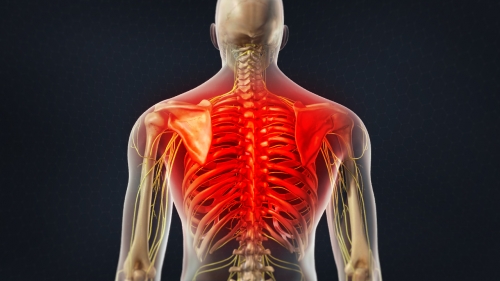
The longest section of the spine is called the thoracic spine. It is the longest section of the spine and the only one attached to the rib cage. It starts at the base of the neck, goes down to the abdomen and connects to the neck (or, cervical) spine, and the lumbar (or, lower back) spine. The thoracic spine is made up of 12 vertebrae (T1 through T12 vertebrae) which sit on top of each other forming the basis of the thoracic spinal column. This gives support to the rib cage, neck, nerves, blood vessels and the flexibility of joints.
Thoracic back pain is the pain or discomfort that occurs in the thoracic spine. Its main functions are to:
- Protect the spinal cord: The spinal cord is a bundle of nerves that send electrical signals throughout the body. It begins at the base of the brain through the vertebral canal of the cervical spine and thoracic spine and then branches into smaller nerve bundles in the lumbar spine.
- Anchoring the rib cage: The rib cage is supported by the thoracic spine in the back, which is a structure that surrounds and protects organs such as the lungs and heart.
The cervical and lumbar spine are for mobility, and thoracic spine provides the body more for stability.
Causes Of Thoracic Pain
Thoracic back pain is typically due to inflammation of the surrounding soft tissues and muscles of the thoracic spine. This is usually because of;
- A sudden strain or sprain gotten through an accident or injury
- Standing or sitting in a slouched position over time
- Using a backpack
- Lack of muscular strength
- Overuse by repeating a movement persistently
Other causes could include:
- Thoracic stenosis which is narrowing of the spine usually due to wear and tear
- Slipped discs
- Fractures of the vertebrae
- Spinal infection
- Osteoporosis
- Spinal osteoarthritis
- Shingles
- Ankylosing spondylitis which is inflammation of the joints between the vertebrae
- Spinal tumors
- Scheuermann’s disease which is inflammation of the joints of the spine which results in spinal curvature
- Other sources of thoracic spinal pain can come from problems affecting the lungs, the esophagus, stomach, gallbladder and the pancreas.
Symptoms Of Thoracic Pain
Thoracic spinal pain often begins in the soft tissue, radiating into the arms, around the chest and/or down the legs. Radiating pain from the spine into the chest could mean there is a pinched nerve in the spine that may require surgery.
Other Symptoms Include:
- Lower back pain that may persist for more than 10 days
- Inability to tiptoe or walk on heels
- Lower back stiffness which may restrict range in motion
- Pain or stiffness that makes one unable to maintain ordinary posture
- Spasms of the muscles
Diagnosis Of Thoracic Pain
To identify the cause of the above symptoms, your expert physician may order the following exams:
- Blood tests
- X-ray
- Magnetic Resonance Imaging (MRI)
- CT scan
- Electromyography or nerve conduction velocity testing
Treatment Of Thoracic Pain
Nonsteroidal anti-inflammatory medications, often referred to as NSAIDs, can be used to manage mild to moderate pain, and more serious Narcotic medications and muscle relaxants can be added for severe cases.
In some instances, physical therapy may be recommended. That could include pelvic traction, gentle massages, heat and ice therapy, electrical muscle stimulation, ultrasound and stretching exercises.
If all else fails, thoracic spine surgery will be considered.
The techniques used in thoracic spine surgery are similar to that of the lumbar spine. These techniques include:
DISCECTOMY: relieving pressure from a nerve ending that is compressed by a bone spur or a bulging disc.
FORAMINOTOMY: opening up the bony hole in the spinal canal, or the foramen, where the nerve root exits.
SPINAL FUSION: reducing painful motion and strengthens the spine. Removing the discs between two or more vertebrae, the surgeon fuses the vertebrae next to each other with special metal screws or bone grafts.
The recovery time for thoracic spine surgery is longer than lumbar surgeries, however the duration of the procedure, downtime and recovery vary depending on the patient.
Why Bonex?
At Bonex Klinik, innovative treatment plans are designed specific to cervical spine and neck treatment that addresses the source of pain. Our expert team of clinic staff is able to successfully explore which options of treatment are best for you after a thorough assessment. Using top-tier technology, Bonex Klinik doctors are able to address the source of pain and create a simple to understand patient care plan getting you back to life as soon as possible. We recognize that in seeking treatment you have many options. You will find an excellent team of healthcare professionals at Bonex Klinik with a specific collaborative planning team that will help you achieve the pain free outcomes you desire.
From diagnosis to discharge, spine treatment is developed by your highly trained team of specialists specific to what you require.

