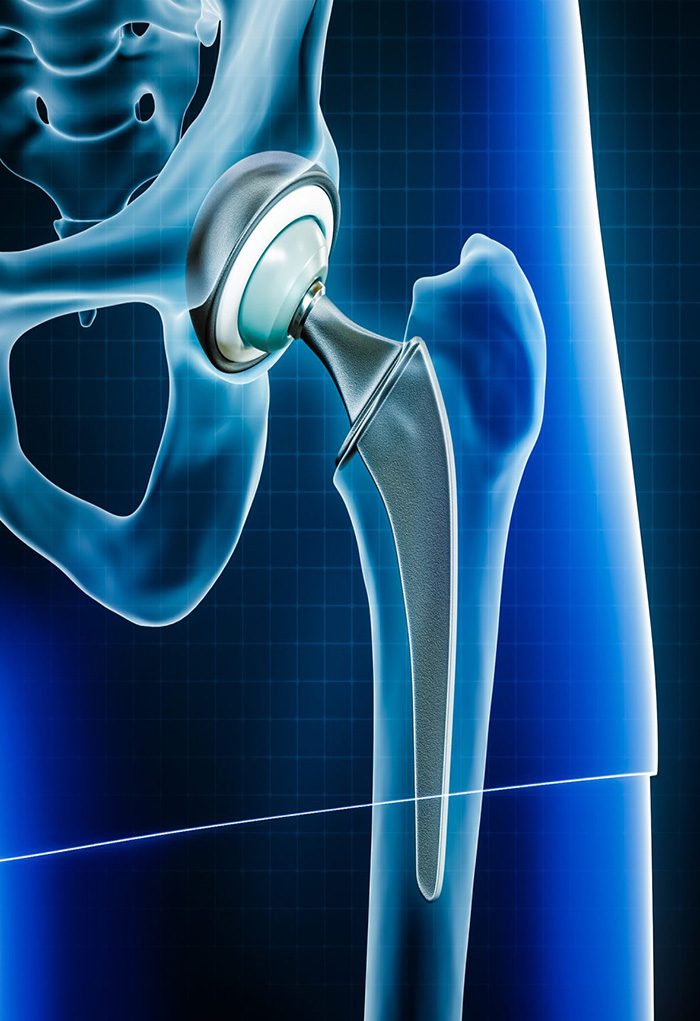
Joint Replacement

dgwr
Our services

Joint Replacement

Joint replacement, also known as arthroplasty, is a surgical procedure that involves replacing a damaged or worn-out joint with an artificial joint, also known as a prosthesis. This prosthesis is made of either metal, plastic, or ceramic and is created to mimic the movement of a natural joint.

Joint replacement surgery is often recommended for people who have severe joint damage due to arthritis, trauma, or other medical conditions that lead to joint pain and stiffness. The most common joints that undergo joint replacement are the hips, and knees, although it can also be performed on other joints, such as the shoulders, elbows, and ankles.

Joint replacement surgery is considered a major surgical procedure that is performed with the goal of relieving pain, restoring mobility, and improving the quality of life for the patients suffering from severe joint pain, stiffness, and disability.

Joint Replacement Surgery Potential Risks

Joint replacement surgery is a remarkable procedure with a high success rate, but like any other surgery, it carries potential risks. Infection, blood clots, nerve damage, and implant problems are a few of these. It’s worth knowing that these hazards have been significantly reduced by advances in medical technology and expert surgeons, with the vast majority of patients reporting substantially reduced pain and enhanced mobility.

Techniques

Types of Joint Replacement Procedures

Insights into your medical condition can be gained using a variety of diagnostic imaging techniques. The most common are:

Total Knee Replacement (TKR)

Total Knee Replacement (TKR)

The entire knee joint is replaced during this treatment with metal and plastic parts.

Partial Knee Replacement (PKR)

Partial Knee Replacement (PKR)

This entails conserving healthy tissue by merely replacing the injured area of the knee joint with prosthetic components.

Total Hip Replacement (THR)

Total Hip Replacement (THR)

In this case, a synthetic metal-and-plastic ball-and-socket joint is used to replace the injured hip joint.

Hip Resurfacing

Hip Resurfacing

This is a less intrusive option to a total hip replacement. The femoral head is not removed during hip resurfacing; rather, it is trimmed and covered in a smooth metal cap.

Reverse Shoulder Replacement

Reverse Shoulder Replacement

This surgery is done when the rotator cuff or shoulder joint is severely damaged. It encompasses switching the positions of the ball and socket in the shoulder join

Recovery After Joint Replacement

Incredible progress awaits you on your journey to recovery after joint replacement surgery at Bonex Klinik in Dubai. Remember, each person’s healing path is unique and influenced by their overall health. It’s important to know that many patients can leave the hospital just days after surgery. As you move forward, a well-designed rehabilitation program, including physical therapy, will play a crucial role in restoring strength and mobility to your affected joint. Embrace this process with positivity and patience, knowing that although full recovery may take a few weeks or months, every step you take brings you closer to reclaiming an active and fulfilling life If you are experiencing joint pain and stiffness, get in touch with us here at Bonex Klinik, and we’ll help you determine if joint replacement surgery is the right option for you.
Bonex Klinik

Insurance coverage

Bonex Klinik

Our doctors

Best Orthopedic Doctor

Dr. Ryley Mueller

Cardioligist

A small river named Duden flows by their place and supplies it with the necessary