
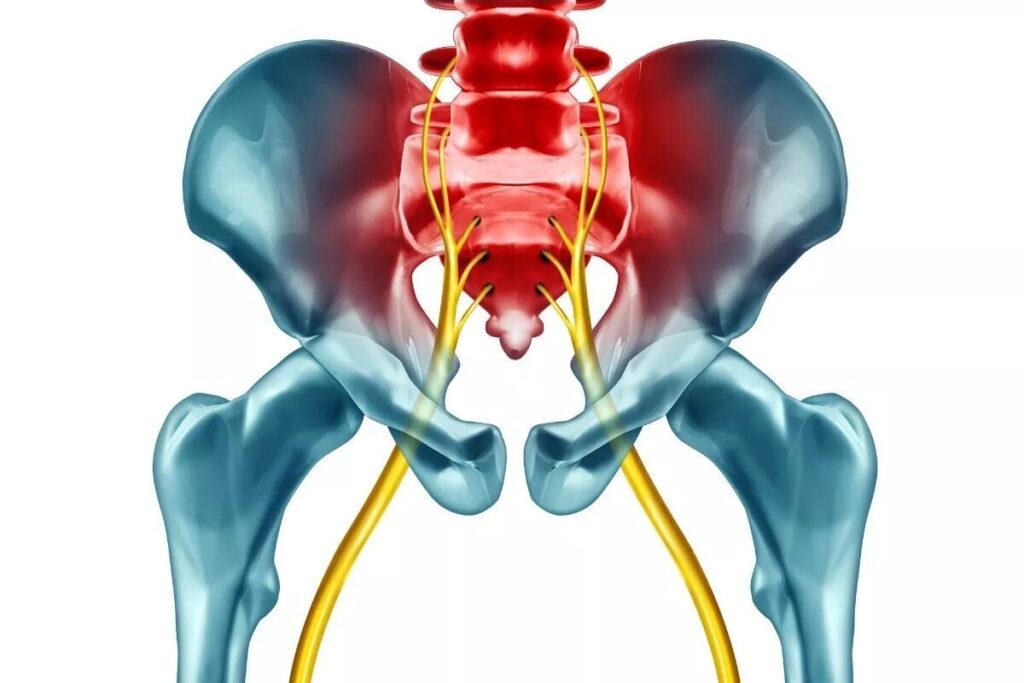
Sciatica is pain in the lower back that radiates through the leg. Its medical terminology is lumbosacral radiculopathy and is caused by a slipped or herniated disc in the spine.When the sciatic nerve is compressed or pinched, it causes pain typically affecting only one side of the body. It is possible that pain radiates to both legs or lower limbs.
A slipped or herniated disc is when a soft cushion of tissue between the spinal bones pushes out, applying pressure on nerves, especially the sciatic nerve in the lower back. This can be extremely painful and its cause is usually age-related. Often, this leads to pain, numbness and weakness in the leg.
Risks For Sciatica
The main causes of sciatica are age, sedentary lifestyle, smoking cigarettes, and lifestyle.
Age: while herniated disks can occur for adults or older ages and cause sciatic pain, disc degeneration, bone spurs and lumbar stenosis (narrowing of the spinal canal and foramen) can cause pain, numbness and even weakness to one or both legs. These conditions are more common among older people.
Sedentary lifestyle: sitting for extended periods of time or live a mostly sedentary lifestyle are at a higher risk for sciatica than active people
Smoking cigarettes: smoking tobacco increases the risk of developing a disc disease.
Lifestyle: lifting heavy weights, bad posture, and twisting your back can likely lead to sciatica.
Symptoms Of Sciatica
Radiating pain from your lower back through your buttocks and down the back of the leg into the foot is a very common symptom of sciatica. From mild to severe, some might experience it like an electric shock that is irritated by coughing, sneezing or sitting for an excessive period of time.
Some patients report having numbness, tingling or weakness in the affected leg or foot.
Diagnosis:
At Bonex Klinik, a spine specialist will assess the medical history of the patient, then move to a physical exam, checking for muscle strength, sensation and reflexes. Patients may need imaging tests such as an x-ray, MRI, CT scan and/or electroneuromyography (ENMG) for the accurate diagnosis.
Non-invasive Treatment:
At Bonex, we will customize a treatment plan based on the specific patient’s case and symptoms. The plan may feature anti-inflammatory, painkilling, and muscle relaxing medications, spinal injections, and/or physical therapy-rehabilitation.
Surgical Treatment:
If the patient does not show improvement from a conservative treatment approach, our spinal surgeons will proceed with any necessary procedure to alleviate sciatic problems due to lumbar disc herniation. The main indicators for surgery include chronic pain to the leg and foot, weakness of the legs, and more severe nerve control issues, such as loss of bowel and/or bladder control, also called cauda equina syndrome.
Why Bonex Klinik?
At Bonex Klinik, innovative treatment plans are designed specific to cervical spine and neck treatment that addresses the source of pain. Our expert team of clinic staff is able to successfully explore which options of treatment are best for you after a thorough assessment. Using top-tier technology, Bonex Klinik doctors are able to address the source of pain and create a simple to understand patient care plan getting you back to life as soon as possible. We recognize that in seeking treatment you have many options. You will find an excellent team of healthcare professionals at Bonex Klinik with a specific collaborative planning team that will help you achieve the pain free outcomes you desire.
From diagnosis to discharge, cervical spine treatment is developed by your highly trained team of specialists specific to what you require.

