
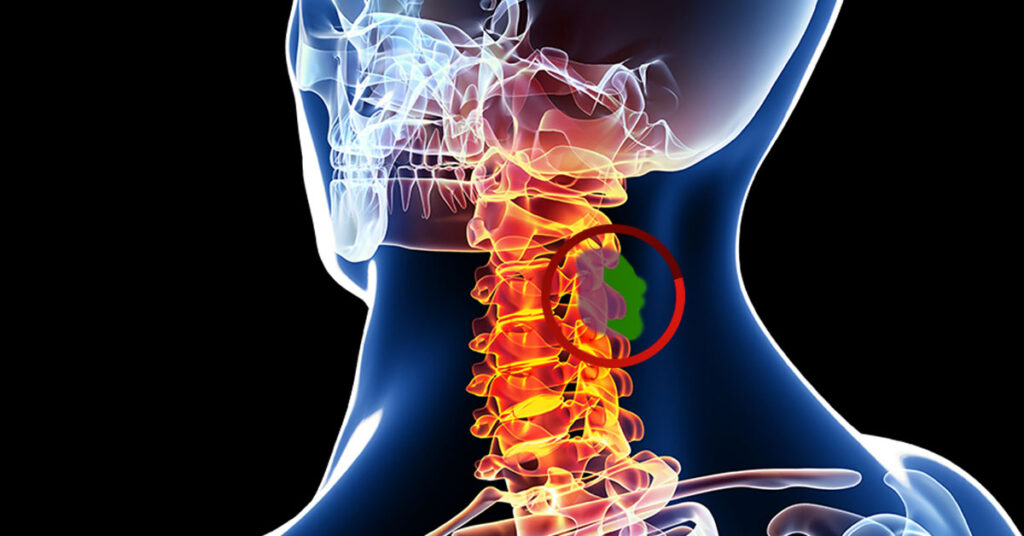
Spinal Tumors are abnormal masses of tissue growth which surround the spinal cord. In identifying spinal tumors,there are a few different ways to categorize them depending on whether it is primary or secondary. A PRIMARY TUMOR is one that is found in the area in which it originated from, in this case the spine or spinal cord. A SECONDARY (METASTATIC) TUMOR is due to cancer spreading from another area of the body to the spine.
A spinal tumor can also be described as benign or malignant.
A BENIGN SPINAL TUMOR has well defined borders, clean edges and does not infiltrate into healthy tissue. A benign tumor is not cancerous and can be removed if it is causing pressure on the spine. Benign spinal tumors include schwannomas, meningiomas, osteoid osteomas and osteoblastomas.
A MALIGNANT TUMOR is cancerous, spreading to healthy tissue within the body. Malignant tumors include Ewing sarcomas, chondrosarcomas and osteosarcomas.
Spinal Tumors are also categorized by their location within the spine.
INTRAMEDULLARY SPINAL TUMORS: These types of Tumors tend to grow within the spinal cord itself or in the nerves that extend from the spinal cord such as the upper spine and neck (cervical spine). They are often ependymomas, astrocytoma or hemangioblastomas. These types of spinal Tumors are usually benign and hard to remove based on their locations.
INTRADURAL-EXTRAMEDULLARY TUMORS: These occur outside the spinal cord but within its protective covering (known as the dura). They are also benign and can be difficult to remove surgically due to their location, and they can also recur after treatment. They include meningiomas, Schwannomas or neurofibromas.
EXTRADURAL TUMORS: This is the most common form of spinal Tumor, forming outside the spinal cord in the cartilage of the vertebrae, and the dura in the bones. They are metastatic Tumors, usually spreading from the cancer of the breast, lung, prostate and kidney. They include osteosarcomas, osteoblastomas and osteoid osteomas.
Causes Of Spinal Tumors
The causes of spinal tumors are largely unknown, but genetics and environment are suspected to be a cause.
Two genetic traits have been linked to several tumors.
NEUROFIBROMATOSIS 2: when benign tumors develop on or near the nerves, causing a loss of hearin in one or both ears. Individuals with neurofibromatosis tend to develop spinal canal tumors as well.
VON HIPPEL-LINDAU DISEASE: A rare disorder that is associated with blood vessel tumors, or hemangioblastomas, in the retina, brain and spinal cord with other types of tumors in the adrenal glands or kidneys.
Symptoms Of Spinal Tumors
The most common symptom of benign and malignant spinal cord tumors is pain in the mid-to lower back which increases with activity and can get worse when lying down at night. This pain cannot be attributed to stress or exercise. The pain may worsen overtime and spread to the arms, hips, legs or feet.
Other symptoms include:
- Muscle weakness or loss of sensation in the arms, chest or legs
- Pain at the site of the tumor due to the growth of the said tumor
- Back pain spreading to other parts of the body
- Loss of bowel or bladder function
- Spinal abnormality or scoliosis
- Difficulty walking
- Fluctuating degrees of paralysis
- Diminished sensitivity to pain, cold or heat
- Stiffness of the back or neck
Diagnosing Spinal Tumors
Spinal tumors are often overlooked because they mimic other common conditions. Your physician will start investigating your full medical history and perform both general physical and neurological examinations. When spinal tumor is suspected, there are a few exams that can help detect where the tumor is and the severity:
COMPUTERIZED TOMOGRAPHY (CT): This test provides detailed images of the spine using a narrow beam of radiation.
SPINAL MAGNETIC RESONANCE IMAGING (MRI): This test provides accurate images of the spine, spinal cord and nerves using a powerful magnetic field and radio waves. This is the preferred test for diagnosing spinal tumors.
BIOPSY: This is the only way to determine the exact type of spinal tumor and involves examining tissue samples under a microscope.
Treatment Of Spinal Tumors
The treatment of spinal tumors will vary depending on the different types and categorizations.
Treatment could include RADIATION, CHEMOTHERAPY, SURGERY or a combination of the three depending on the patient’s situation.
Why Bonex?
At Bonex Klinik, innovative treatment plans are designed specific to cervical spine and neck treatment that addresses the source of pain. Our expert team of clinic staff is able to successfully explore which options of treatment are best for you after a thorough assessment. Using top-tier technology, Bonex Klinik doctors are able to address the source of pain and create a simple to understand patient care plan getting you back to life as soon as possible. We recognize that in seeking treatment you have many options. You will find an excellent team of healthcare professionals at Bonex Klinik with a specific collaborative planning team that will help you achieve the pain free outcomes you desire.
From diagnosis to discharge, spine treatment is developed by your highly trained team of specialists specific to what you require.

